
The Importance of a Robust Network Infrastructure for Business Success
The Importance of a Robust Network Infrastructure for Business Success
1/9/20251 min read
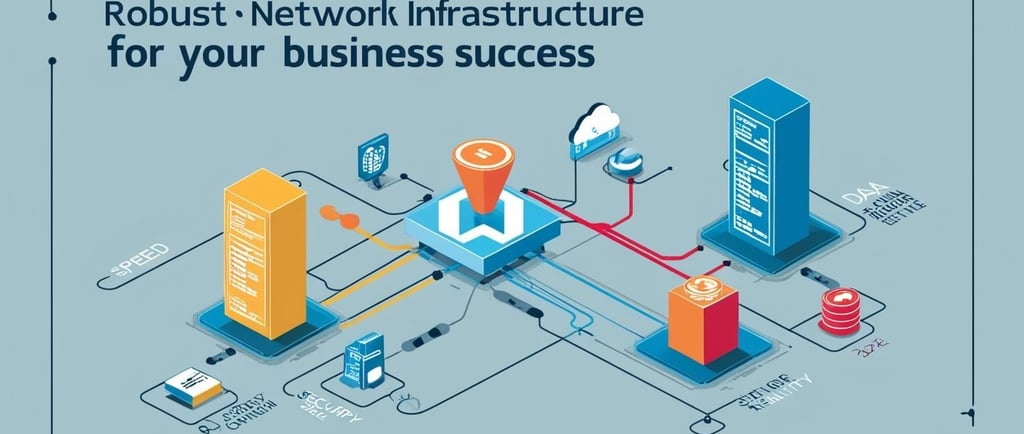
Why a Reliable Network Infrastructure Matters
Enhanced Communication: A robust network allows for smoother communication between employees, clients, and partners. This is especially important for businesses with remote teams or those operating in multiple locations. Technologies such as VoIP (Voice over IP) and video conferencing rely heavily on strong networks.
Increased Productivity: Slow network speeds and frequent downtimes can hinder employee productivity, affecting the workflow and business operations. A strong network ensures minimal interruptions, which translates to more efficient day-to-day operations.
Data Security: With the growing number of cyber threats, your network’s security becomes critical. A well-designed network with firewalls, encryption, and secure access points can protect your sensitive business data from external threats.
Scalability: As your business grows, so does the demand for more network resources. A robust network infrastructure is scalable, allowing you to expand without disruption. With cloud services and network virtualization, businesses can quickly add new servers, users, and devices without compromising on performance.
How to Build a Robust Network Infrastructure
Building a solid network infrastructure requires careful planning and implementation. Here are some steps to ensure your network is future-proof:
Network Assessment: Conduct a thorough assessment of your current network to identify potential bottlenecks and areas of improvement.
Invest in High-Quality Equipment: Use high-performance routers, switches, and cables to ensure fast and reliable data transmission.
Regular Monitoring and Maintenance: Regular monitoring of your network ensures that issues are identified and resolved before they affect business operations.
Cybersecurity Measures: Implement proper security protocols, such as intrusion detection systems (IDS), firewalls, and VPNs, to safeguard your network from external threats.
